- calendar_today August 24, 2025
.
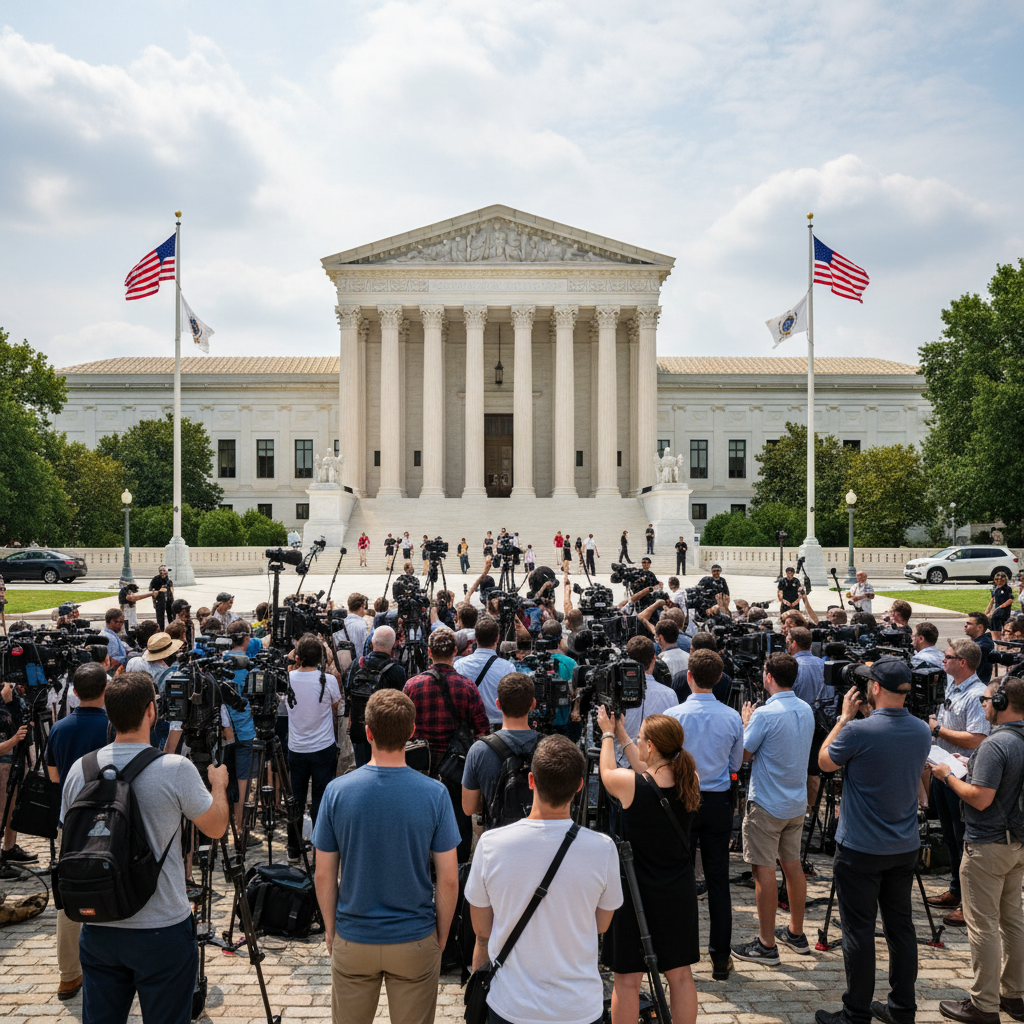
Trump administration lawyers submitted an emergency petition to the Supreme Court on Tuesday night to put on hold U.S. Agency for International Development grant payments after the U.S. Court of Appeals for the D.C. Circuit rescinded a federal court judge’s order requiring the money to be sent before Sept. 30.
The filing returned the legal question to the high court for the second time in six months after the Trump administration said it would suspend nearly all foreign aid payments, including hundreds of millions in U.S. Agency for International Development grants. After Trump returned to office in January, he ordered the federal government to stop almost all foreign aid payments on his first day back.
The president issued the order as part of what he called a fight against “waste, fraud, and abuse” in the U.S. foreign aid budget.
The order was immediately challenged in federal court. U.S. District Judge Amir Ali of Washington, D.C. ruled in February that the White House had to resume the money. In his ruling, Ali said the federal government would have to continue spending the money Congress has already approved. The administration would be forced to restart aid payments on billions of dollars in USAID grants.
White House Responds
The White House didn’t like that answer. The U.S. Court of Appeals for the D.C. Circuit heard the case again earlier this month. A three-judge panel voted 2-1 to overturn Ali’s injunction. Writing for the majority, Judge Karen L. Henderson, a George H.W. Bush appointee, said the plaintiffs — a group of foreign aid groups who want their grants to be restored — didn’t have legal standing to sue the administration. Henderson wrote that the plaintiffs do not have a valid “cause of action” under the impoundment doctrine.
While that was a major victory for Trump, the court has yet to give a formal mandate to force the administration to honor its decision. The delay of a mandate has left the original order by Judge Ali and the payment schedule that came with it, in effect. It means that unless the money starts flowing immediately, the administration could be forced to release the full $12 billion in the last month of the fiscal year.
Appeal Filed
U.S. Solicitor General D. John Sauer filed the emergency petition with the Supreme Court on Tuesday. He said if the high court doesn’t intervene, the Trump administration will be “compelled to rapidly obligate some $12 billion in foreign-aid funds by September 30.”
In the filing, Sauer said the “balance of hardships” is in favor of the Trump administration. Federal courts, he wrote, should not decide the case, and that “Congress did not upset the delicate interbranch balance by allowing for unlimited, unconstrained private suits.”
The plaintiffs, a group of foreign aid groups, do not want that to happen. The foreign aid organizations have projects that rely on USAID grants. The projects are already ongoing and are only to be funded by the foreign aid grants.
The groups say the president does not have the power to rescind money once Congress has approved it. The groups are saying that the president can’t rescind money because the Impoundment Control Act, passed by Congress in the 1970s to rein in executive power, along with the Administrative Procedure Act. The groups are also making an argument that President Trump has the authority to rescind money because it hasn’t yet been committed to specific projects. The programs have already been approved for the money they are to receive.
Impoundment Control Act
ICA limits the executive branch’s ability to reduce or delay funding. While it gives the president a period of time to ask Congress to rescind funds, the ICA has been amended by the Administrative Procedure Act and other laws.
In the last budget, Congress passed an increase of $230 million, with $12 million for foreign aid. It’s in these accounts that ICA applies, not to any foreign aid programs that aren’t fully funded by the president.
The filing by the Trump administration, once again, sets up a battle with the Supreme Court. In April, the high court issued a narrow 5-4 ruling on a similar dispute. With billions of dollars and less than a month until the Sept. 30 deadline, it’s once again asking the high court to take on the issue.
President Trump has been looking to take the money from foreign aid to change how the U.S. government spends its money and to have more control over foreign aid. The foreign aid groups, on the other hand, are fighting to keep their money because many of their programs have already started. Without the money, the projects would have to be closed down and their work would be wasted.
The appeals court decision was put on partial pause, and the administration is now asking for fast action by the high court. Depending on what the Supreme Court decides on the emergency filing by Trump’s administration could decide whether or not $12 billion in foreign aid is sent. It could also set a precedent on the president’s authority to rescind and delay spending even after the money has been approved by Congress.