- calendar_today August 10, 2025
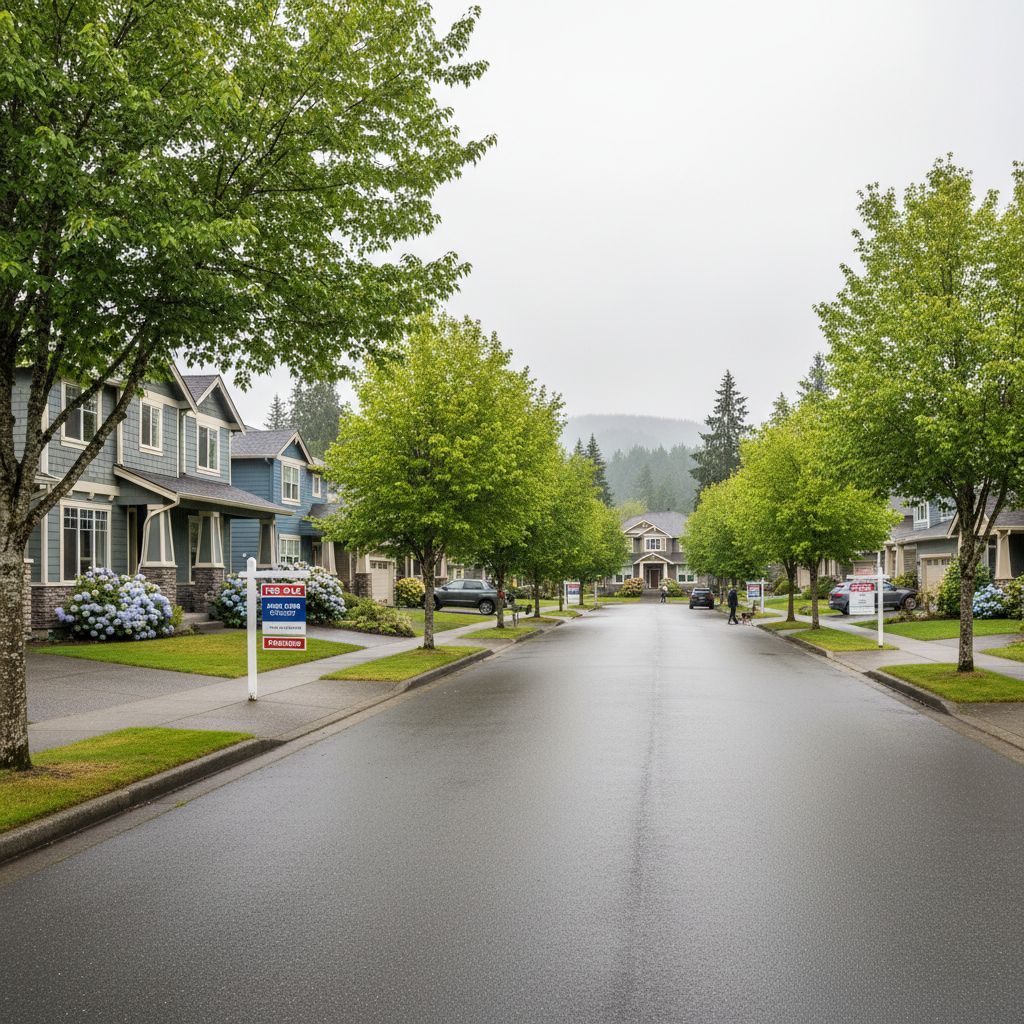
The Northwest housing market in 2025 has slowed to a crawl. After years of rapid growth fueled by tech-driven migration, low interest rates, and urban exodus trends, buyers across Washington, Oregon, and Idaho now face a market that feels paralyzed.
Unlike previous housing cycles marked by price crashes or foreclosure waves, today’s regional slowdown is defined by stasis: low inventory, high mortgage rates, and homeowners clinging to pandemic-era loans. Economists are calling it a “market freeze,” and the statistics behind it highlight why buyers in cities like Seattle, Portland, and Boise are hitting the brakes.
Below, we break down five key statistics that explain why the Northwest housing market is stuck—and what it means for buyers in 2025.
1. Mortgage Rates Remain Above 6.8%
One of the most significant hurdles for Northwest buyers is the high cost of borrowing. According to Freddie Mac, the average 30-year fixed mortgage rate remains elevated at 6.91% as of July 2025, echoing the national trend. That’s still nearly double the pre-pandemic norm and well above the sub-3% rates that drove a buying frenzy just a few years ago.
Despite inflation falling below 3%, the Federal Reserve has held interest rates steady, waiting for more sustained progress before easing policy.
This has locked many current homeowners into their properties. Around 60% of mortgage holders in Washington and Oregon have locked in rates below 4%, according to Redfin data, making it financially illogical to sell and repurchase at today’s higher rates.
“There’s no incentive for existing homeowners to move,” said Nadia Evangelou, senior economist at the National Association of Realtors (NAR). “They’re locked in by rates and sitting tight.”
2. Inventory Levels Drop 22% Year-Over-Year
The lock-in effect is driving a sharp reduction in listings across the Northwest. According to Realtor.com’s June 2025 Housing Report, active listings in Washington and Oregon are down 22% year-over-year, with some metro areas facing even deeper deficits.
Seattle’s inventory has plunged nearly 35% compared to mid-2024, while Portland’s supply is down nearly 30%. Boise, which once led the nation in home price growth, has seen available homes shrink by over 40%.
Meanwhile, new construction is not keeping pace. Developers in suburban King County and the Willamette Valley are slowing down due to softening demand and lingering construction cost inflation.
“We’re essentially in a supply drought,” said Danielle Hale, Chief Economist at Realtor.com. “This shortage is what’s keeping prices elevated and competition fierce even in a high-rate environment.”
3. Home Prices Stay High: $419,000 National Median
Despite the regional slowdown in sales, home prices have remained high. The Redfin Q2 2025 Market Report shows the national median home price rising to $419,000, up 2.7% from a year ago—and Northwest cities are even higher.
In Seattle, median home prices continue to hover above $775,000, while Portland remains just above $540,000. Even mid-size cities like Spokane and Eugene have reported price increases year-over-year due to low inventory and ongoing demand from in-migration.
The result? A highly competitive environment persists, even as many buyers retreat.
“We’re seeing demand recalibrate, but not collapse,” said Glenn Kelman, CEO of Redfin. “With so little inventory, prices just aren’t falling the way you’d expect.”
4. First-Time Buyers Are Being Pushed Out
First-time buyers are among the hardest hit in the Northwest. The NAR’s 2025 Homebuyer Profile shows that only 26% of recent U.S. home purchases involved first-time buyers—a figure that’s even lower in the Pacific Northwest’s higher-cost cities.
Several forces are converging:
- Mortgage rates have driven up monthly payments
- Home prices in markets like Seattle and Bend remain well above national averages
- High student debt and rent burdens are limiting savings
- Average down payments now top $90,000 in many Northwest metros
For many would-be buyers, this reality is pushing them to delay plans or search in smaller markets like Yakima, Medford, or Coeur d’Alene.
“We’ve essentially priced out an entire generation of buyers,” said Mark Fleming, Chief Economist at First American Financial Corp. “The entry point into homeownership has never been higher.”
5. Homebuilders Slow Production Amid Cost Pressures
Northwest builders are pulling back. According to the U.S. Census Bureau, residential building permits for single-family homes dropped 12% year-over-year in the first half of 2025—a trend mirrored across Washington, Oregon, and Idaho.
Builders cite multiple headwinds:
- Reduced buyer traffic due to high mortgage rates
- Persistently high labor and material costs
- Zoning restrictions and permitting delays in cities like Portland and Seattle
As a result, many developers are shifting focus to build-to-rent models or multifamily units in areas like Vancouver, WA, or Boise’s Treasure Valley, where rental demand remains strong.
This retreat from single-family construction continues to choke inventory and limit buyer options.
What Experts Are Saying About 2025’s Frozen Market
Analysts agree: 2025’s Northwest housing market slowdown is not a crash, but a standoff. Unlike the 2008 financial crisis, the region is not seeing widespread distress sales or plummeting values. Instead, most homeowners are simply not moving.
“It’s a psychological and financial gridlock,” said Ivy Zelman, CEO of Zelman & Associates. “People aren’t buying because they can’t afford it, and people aren’t selling because they don’t want to lose what they already have.”
Experts believe that unlocking the market will require a combination of lower mortgage rates and stronger wage growth. Some also point to the need for state-level zoning reforms and expanded first-time buyer programs, especially in tight housing corridors like Puget Sound and the I-5 corridor.
What Buyers Should Watch in Late 2025
For buyers in the Northwest sitting on the sidelines, the latter half of 2025 could provide some signals.
Keep an eye on:
- Federal Reserve rate decisions that may lower borrowing costs
- Forced seller activity from job relocations or life changes
- Seasonal inventory shifts in late fall and early winter
- Local or state-level buyer assistance programs in Oregon, Washington, or Idaho
In the meantime, experts recommend staying financially prepared, monitoring hyper-local market data, and exploring off-peak purchase windows in less competitive markets.
A Market in Pause, Not Collapse
The Northwest housing market in 2025 isn’t collapsing—it’s simply on pause. Elevated rates, limited new construction, and a deep freeze in listings have left many would-be buyers feeling stuck. Until major economic or policy shifts unlock mobility, the region’s housing market may remain gridlocked into 2026.
For now, patience, adaptability, and informed decision-making will be essential tools for navigating one of the nation’s most challenging housing environments.