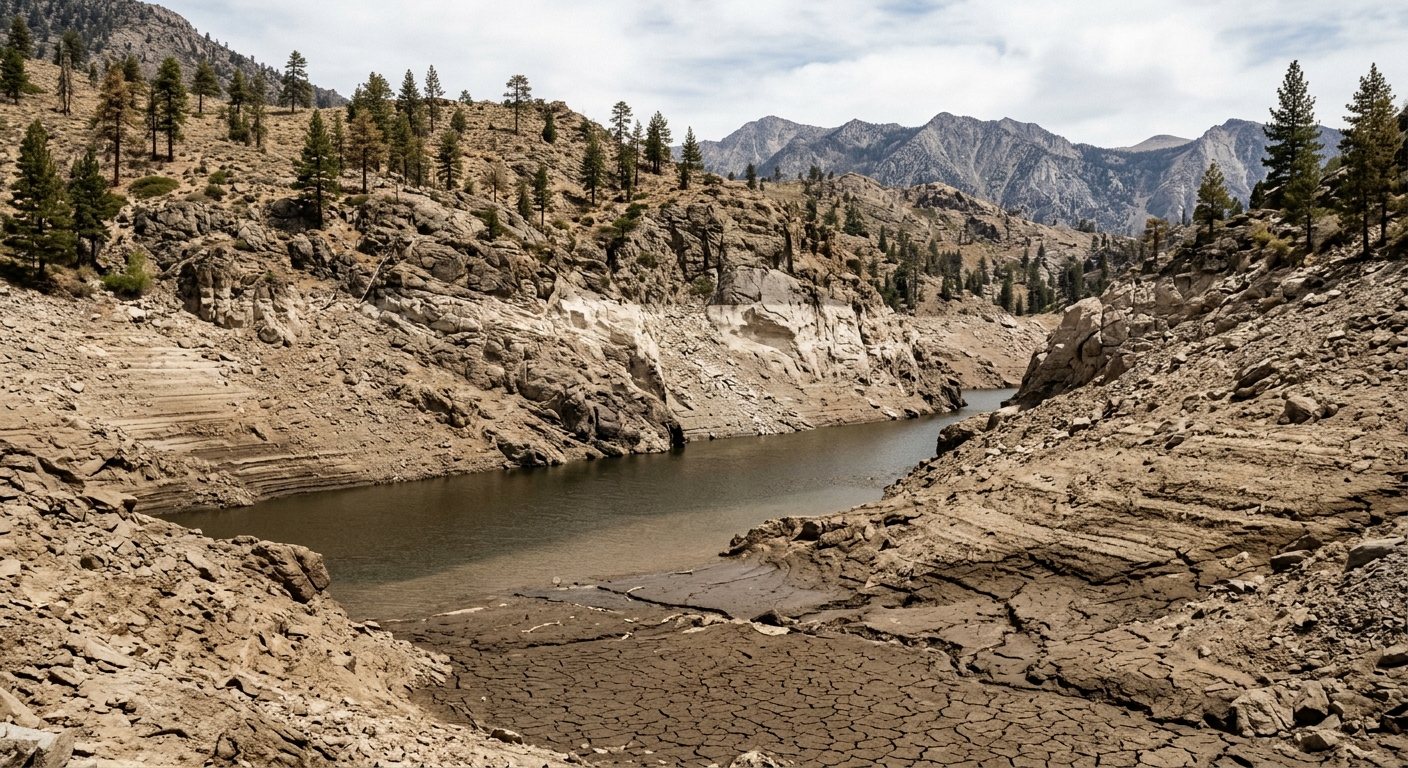
AI-generated illustration; not a photograph of the reported event.
- calendar_today September 26, 2026
In the Northwest USA, the 2025-26 winter season brought a dramatic decline in Idaho snowpack, pushing the state into severe drought conditions and raising major concerns for regional water security. With only two feet of natural snowfall reported at Bogus Basin, stakeholders throughout Idaho are contending with deepening water shortages and mounting pressure on both the state’s infrastructure and agricultural sector.
Record-Low Snowpack and Its Consequences
Idaho’s snowpack typically serves as the primary water source for communities, agriculture, and hydropower, gradually supplying rivers and reservoirs through the spring melt. The latest winter, however, saw the state’s snow reserves at a fraction of their usual levels. This year’s insufficient accumulation catalyzed extreme Idaho drought conditions, disrupting the delicate balance in Idaho’s water systems and threatening economic stability across the Northwest USA.
Bogus Basin’s Early Closure and Increased Artificial Snow
The effects of the low Idaho snowpack were immediate and visible at popular Idaho destinations. Bogus Basin, a major recreation hub, recorded only two feet of natural snow and was forced to lean heavily on artificial snow production. Despite these efforts, the resort experienced early run closures, signaling how profoundly the snow deficit affected local businesses and outdoor activities. Such outcomes not only represent economic loss but also highlight the vulnerabilities in relying on natural winter precipitation patterns.
Reservoir Challenges and Water Supply Threats
The impact on Idaho reservoirs has been especially stark. In eastern Idaho, some reservoirs have plummeted to just 9% of capacity, with runoff ceasing earlier than anticipated. This depletion has compelled many irrigators to access stored water supply well before the traditional start of the irrigation season, reducing the safety net for hotter, drier months. While reservoirs near Boise remain more stable, the boise water picture grows precarious should another year of diminished winter precipitation arrive.
Agriculture and Hydropower Under Strain
For Idaho’s extensive agricultural sector, the ongoing drought brings the specter of reduced irrigation water allocations and heightened risk of agricultural drought. Water shortages already threaten crop yields and livestock, compounding costs for farmers. Meanwhile, low water levels put the state’s hydropower generation at risk, with implications for energy costs and regional supply, especially if another snowpack failure occurs.
Lingering Uncertainty with El Niño and Future Outlook
Forecasts for the coming year indicate an el nino impact that could deliver more precipitation to the Northwest USA. However, state experts caution that unless this moisture arrives as snow rather than rain, the core issue for Idaho snowpack may persist. Inadequate snow accumulation could set the stage for a repeat of historic droughts seen in 1988, 1992, and 2001, when prolonged water shortages led to far-reaching effects across communities, industry, and households.
Mitigation and Monitoring Efforts
Officials and water managers throughout Idaho stress the urgency of careful monitoring and planning. Early warnings have prompted calls for conservation, investment in drought-resilient infrastructure, and renewed focus on sustaining irrigation water for vulnerable populations. Regional cooperation is viewed as essential to safeguard resources as climate variability alters the predictability of Idaho’s winter precipitation.
Community Preparedness for the Next Season
As the Northwest USA watches water levels and weather patterns develop, residents and regional industries alike are urged to prepare for the possibility of extended drought. Whether in urban Boise neighborhoods or rural agricultural districts, Idahoans face the ongoing challenge of adapting to an uncertain water future shaped by fragile snowpacks and shifting climate trends. Sustained awareness and proactive efforts could prove crucial in averting the most severe impacts of Idaho drought in the seasons ahead.