- calendar_today August 9, 2025
The U.S.–China trade war of 2025 has reached a boiling point, and the Northwest USA—home to key export-heavy states like Washington, Oregon, and Idaho—is feeling the pressure. With supply chains, commodity exports, and foreign investment all under strain, the region’s economic stability is being tested in real time.
From Boeing’s production lines to Oregon’s timber mills and Idaho’s chipmakers, businesses are navigating turbulence as tariffs rise and China retaliates. But where there’s disruption, there’s also opportunity—especially for investors willing to pivot quickly.
Trade War Exposure in the Northwest
1. Aerospace: Boeing’s China Headache
The state of Washington, particularly the Seattle metro area, is heavily dependent on aerospace exports. Boeing, a cornerstone of the regional economy, is facing renewed uncertainty. China was once one of its largest buyers of commercial aircraft, but retaliatory trade restrictions have slowed orders and stoked fears of a pivot to European competitors like Airbus.
With Boeing already under pressure from past production issues, a prolonged freeze from China could force job cuts and lower investor confidence.
2. Timber and Lumber Exports Decline
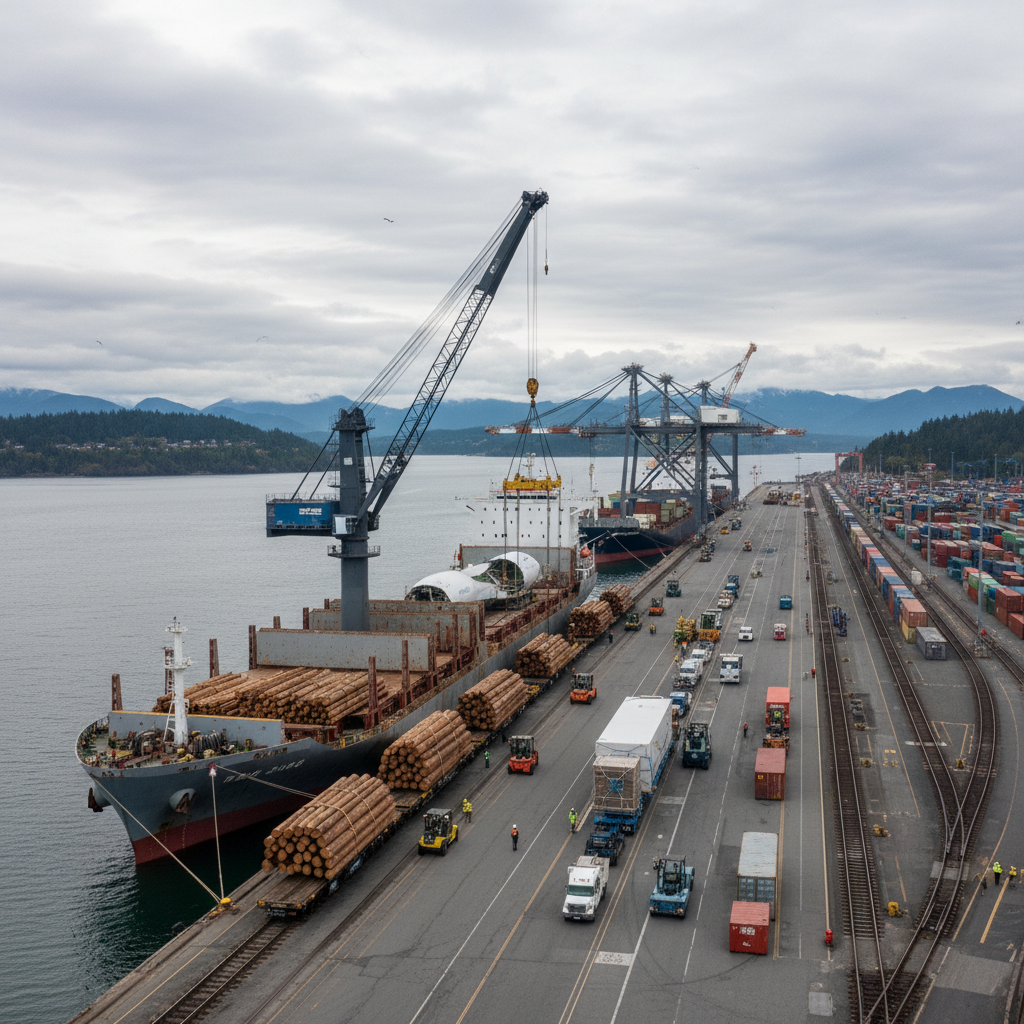
Oregon and Washington are also major exporters of timber and softwood lumber, historically shipped to Asia—including China—for use in construction and manufacturing. However, new Chinese import quotas and shifting demand to Southeast Asia are shrinking the Northwest’s timber export volume by an estimated 41%, according to the U.S. Forest Products Trade Report (Q1 2025).
This leaves smaller timber towns vulnerable to economic contraction unless new Asian partners can be secured.
3. Semiconductors and High-Tech at Risk
Idaho’s economy is tied closely to Micron Technology, one of the country’s top memory chip producers. The company relies on both Chinese materials and market access. With rare earth material restrictions tightening and rumors of China halting purchases of U.S. chips, Idaho’s tech landscape is facing a potential slowdown.
R&D investments remain strong, but volatility has grown in semiconductor ETFs heavily exposed to Chinese buyers.
Regional Policy & Industry Response
- Pacific Trade Diversification Task Force
States across the Northwest have formed a coalition to strengthen trade ties with Japan, South Korea, India, and Canada—major growth markets that could offset Chinese losses. - Green Energy Timber Transition Grants
Oregon has allocated $300 million in federal-backed funds to help timber communities retrain workers for jobs in renewable energy manufacturing and forest conservation. - Boeing Supply Chain Rebates
Washington state is lobbying for federal support and offering tax incentives to stabilize Boeing’s operations and keep smaller suppliers afloat.
What Investors in the Northwest Should Do Now
- Review Aerospace Holdings
Investors holding Boeing stock or aerospace ETFs may want to diversify. Short-term volatility will remain high. Consider gradual rotation into defense-focused contractors or commercial aviation firms less reliant on China. - Explore Domestic Timber REITs
Real estate investment trusts with diversified U.S. forestry holdings could weather the storm better than those tied to Asian exports. Look for firms investing in carbon credits and sustainable lumber alternatives. - Back Semiconductor Innovation
While the chip sector is volatile, companies focused on AI chips, domestic fabs, and non-Chinese buyers will likely benefit from new federal subsidies. Micron, Intel, and U.S.-based chip foundries deserve close attention. - Consider Infrastructure and Port Investments
Northwest ports (like Seattle and Portland) may shift toward other Pacific trading partners. Infrastructure funds tied to port expansion and shipping logistics may offer long-term upside.
The Northwest’s Resilience in a Shifting Trade Landscape
The Northwest is no stranger to international trade risk. Its strong education systems, global ports, and tech-driven economies make it capable of adaptation—but not without pain. For investors, this is a time for cautious optimism, regional awareness, and diversification.
While the U.S.–China trade climate may not cool soon, opportunities remain for those who know where to look—and when to pivot.