- calendar_today August 12, 2025
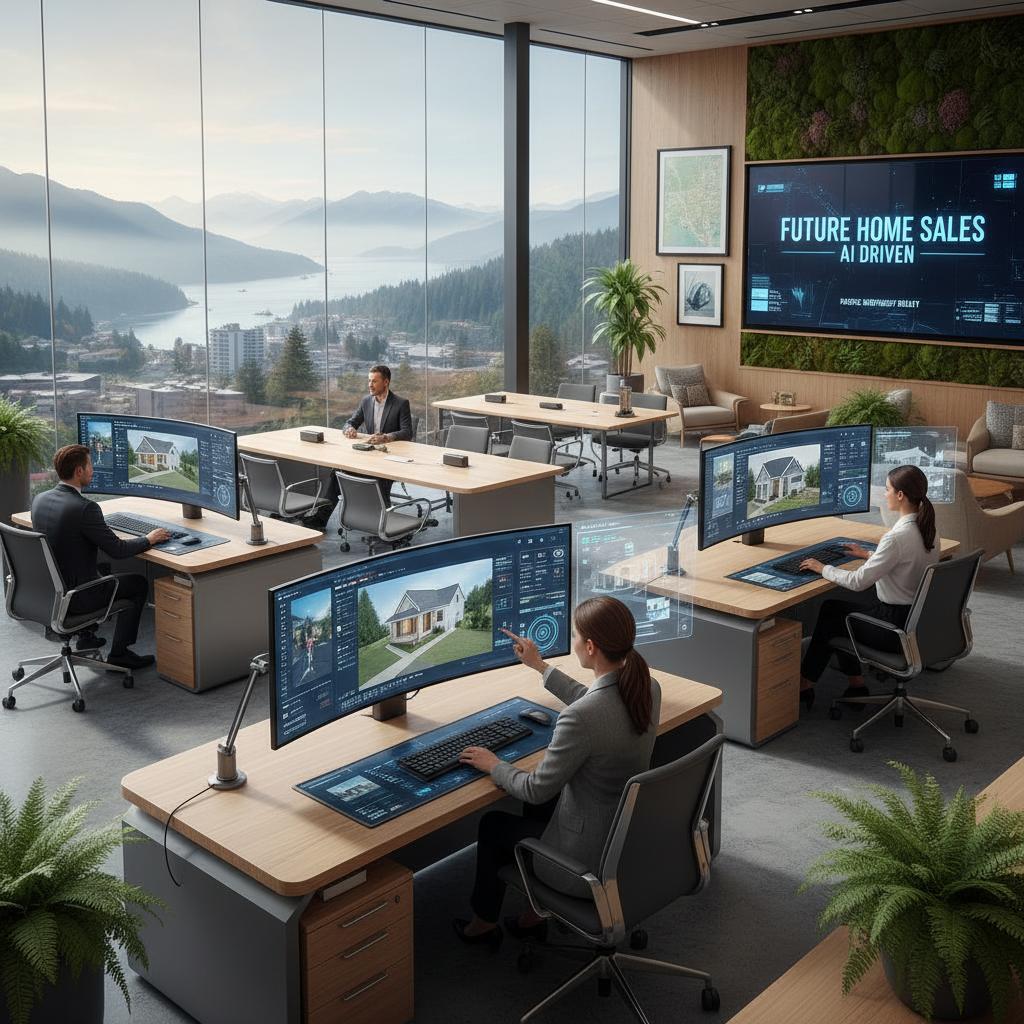
From the tech corridors of Seattle to the rapidly growing suburbs of Spokane, Boise, and Eugene, the Northwest U.S. housing market is leaning into artificial intelligence in 2025. AI tools are being used by agents, lenders, investors, and buyers alike to navigate a market still recovering from the post-pandemic surge and interest rate volatility of recent years.
With home values showing signs of stabilization and new construction starting to return, the need for speed, data accuracy, and strategic insight is driving mass adoption of AI-powered platforms. The result? Faster transactions, smarter decisions, and a reshaped real estate landscape in Washington, Oregon, and Idaho.
1. Real-Time AI Valuations Streamline Sales in Competitive Markets
In fast-paced cities like Seattle, Bend, and Boise, dynamic pricing models powered by AI are quickly replacing static home appraisals. These models integrate real-time sales data, neighborhood trends, seasonal demand, and even buyer sentiment to produce adaptive price bands for listings.
For sellers, this means fewer surprises and faster offers. Buyers benefit by avoiding overpaying in inflated micro-markets. In Portland, where buyer hesitancy lingered through 2023–24, AI-backed pricing has helped rebuild confidence in fair valuations.
2. Smarter Home Search Tools Cater to the Region’s Diversity
Whether someone is searching for an eco-home in Ashland or a townhouse near tech campuses in Bellevue, AI is making home searches more intuitive. Platforms like Zillow, Redfin, and local brokerages use machine learning to understand buyer intent, lifestyle, and deal-breakers, then match users with properties that reflect both hard data (price, size, location) and soft preferences (light, walkability, vibe).
In Portland’s Pearl District or Spokane’s university corridor, for example, AI can prioritize listings near co-working spaces, transit hubs, or green spaces, depending on user profiles. This cuts browsing time significantly and improves conversion.
3. AI-Driven Lending Cuts Through Paperwork
Fintech lenders in the Pacific Northwest are now using AI for rapid mortgage approval—particularly useful in hot submarkets like Redmond or Meridian. Automated underwriting tools analyze thousands of data points, including freelance income, bank transactions, and recurring expenses.
These systems are a game-changer for the Northwest’s sizable gig economy and tech workforce. Buyers can get pre-approved in minutes, making them competitive in tight offer situations.
4. AI-Powered Rental Analysis Boosts Investor Confidence
In multifamily-heavy cities like Tacoma, Eugene, and Boise, investors are using AI to project rental income, occupancy rates, and ROI down to the block level. Algorithms scrape rental platforms, census data, and social media chatter to identify patterns—like shifts in remote work, rising university enrollment, or infrastructure investments.
This intelligence has shifted investor interest toward up-and-coming neighborhoods outside expensive city centers. For instance, markets like Vancouver (WA) and Nampa (ID) have seen a surge in investor-backed deals driven by AI insights showing above-average rental yield and lower turnover risk.
5. Virtual Staging and Chatbot Assistants Become Mainstream
AI-generated listing descriptions and virtual staging are now the norm, especially in Seattle and Portland where design aesthetics matter. Chatbots, available 24/7, walk buyers through listings, offer comparables, and even answer questions about school zones or traffic times.
This “always-on” support has made a difference in reaching out-of-state buyers and second-home shoppers from California or Texas interested in the Northwest’s lifestyle appeal.
6. Sustainability Meets Smart Homes
In a region known for its environmental consciousness, smart home tech is increasingly a deal-sealer. AI-powered HVAC, lighting, and water systems are common in new construction across Washington and Oregon. Listings in places like Bellingham or Corvallis often highlight energy-efficiency scores, solar optimization AI, and maintenance prediction tools.
Buyers are willing to pay premiums—up to 6% more—for homes that blend sustainability with smart features, according to 2025 realtor surveys across the Pacific Northwest.
7. AI Transparency and Ethics in Real Estate
As with other parts of the U.S., AI adoption in the Northwest has sparked conversations about fairness and algorithmic bias. Tech-forward cities like Seattle are leading efforts to audit pricing and lending algorithms to ensure they don’t disadvantage BIPOC communities or low-income buyers.
Portland’s city council is considering regulations that would require AI disclosure in real estate transactions, while regional MLS databases are exploring ways to improve the transparency of predictive models.
8. Training the Next Generation of Tech-Savvy Agents
Brokerages from Boise to Eugene are upskilling their teams to work alongside AI tools rather than compete with them. Agents are learning to interpret data dashboards, train chatbots, and fine-tune AI-generated valuations to better serve clients.
This human-AI partnership is helping rebuild trust in an industry where tech alone isn’t enough—especially in markets where emotional and lifestyle decisions play a big role in buying behavior.
AI Brings Clarity to a Complex Housing Market
The Pacific Northwest is no stranger to innovation—and in 2025, that legacy continues with AI’s expanding role in real estate. As the region balances population growth, sustainability goals, and affordability concerns, artificial intelligence is helping buyers, sellers, and investors make faster, smarter, and more informed decisions. Whether it’s navigating the condo towers of downtown Seattle or scouting rental income in Idaho’s suburbs, AI is no longer a future trend—it’s the new normal for Northwest real estate.