- calendar_today August 21, 2025
.
U.S. President Donald Trump on Monday said the U.S. would admit 600,000 Chinese students to American colleges in the middle of a months-long trade war.
From the White House, Trump signaled a shift in tone from the previous months, when tensions between Beijing and Washington mounted and the Trump administration ratcheted up tariffs on Chinese imports while threatening more.
Trump announced to reporters on the South Lawn. Trump said he had heard reports of a ban on Chinese students coming to the U.S., which he strongly refuted. He said, “I hear so many stories that we’re not going to allow their students, we’re not going to allow the students to come in, and I was so strong on it, I said, let the students come in. It’s very important, 600,000 students. It’s very important. But we’re going to get along with China.”
Trump’s comments come amid what has so far been a fruitless trade negotiation between the two countries. Washington has so far imposed a tariff of 145 percent on all Chinese goods, to which Beijing has retaliated by slapping a 125 percent tariff on all goods coming from the U.S. Both countries’ economies have continued to take a beating as a result of the tariffs, with each side accusing the other of being uncooperative and using it as a leverage point to raise more tariffs on foreign trade.
Earlier this year, negotiators in Geneva put a pause on any more tariffs being issued, though Trump has continued to issue executive orders threatening new tariffs in recent weeks. Last week, he mentioned a potential 200 percent tariff on Chinese-made magnets, a crucial component for defense applications, over which the U.S. has a near-complete reliance on Chinese imports.
“They really have it if you look at it. China, intelligently, went and they sort of took a monopoly on the world’s magnets,” Trump said. “It’ll probably take us a year to have them.”
Trump’s policy has continued to walk a tightrope between putting economic pressure on Beijing while continuing to allow academic and cultural cooperation. Trump’s decision to allow 600,000 Chinese students to study at American universities continues the precedent.
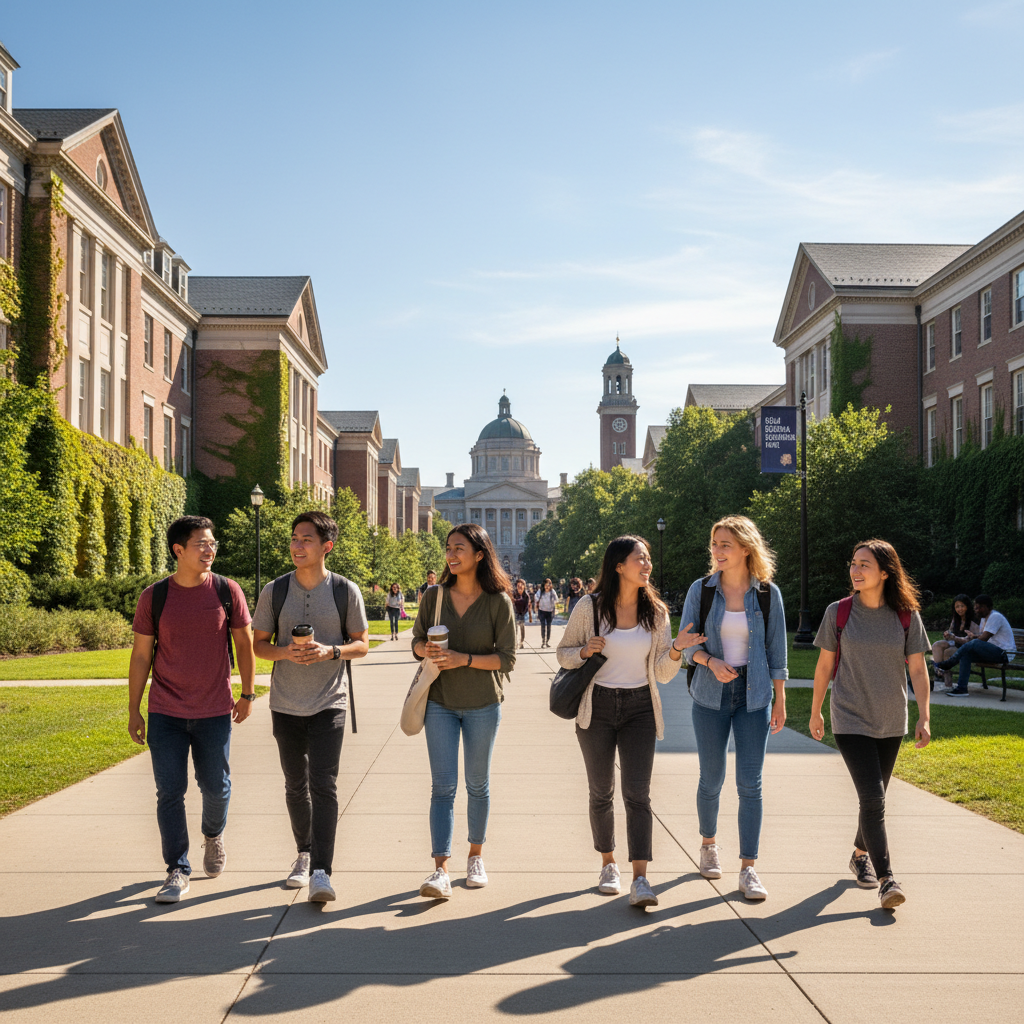
At the moment, there are about 270,000 Chinese students currently enrolled at American universities, according to data provided by the Trump administration. 600,000 would more than double that figure, and would also provide a much-needed cash infusion to U.S. colleges, which depend heavily on tuition payments from international students.
The student visa announcement is a shift from Trump’s earlier immigration policy, which was described as one of the strictest against Chinese students of any previous administration. In May, Trump’s Secretary of State Marco Rubio outlined a policy of “aggressively revoking” visas from Chinese nationals who either were members of the Chinese Communist Party or who were working in research facilities deemed “highly sensitive.”
The policy announcement sparked widespread panic among higher education organizations, and many colleges spoke out against the revocations, fearing loss of funding and academic talent.
In June, Trump appeared to back away from Rubio’s hardline, telling reporters, “I have always been in favor of letting those students come in. I mean, they’re students. I have been in favor of that.” On Monday, he more than doubled down on that stance, with a 600,000 number that could reshape the higher education landscape.
Trump’s announcement of Chinese students came ahead of a meeting with South Korean President Lee Jae Myung. When a reporter asked Trump if he would be open to a meeting with Chinese President Xi Jinping, he was more optimistic.
“I would like to meet him this year,” Trump said. “Because I think it’s important, just to get together.”
“As you know, we’re taking a lot of money in from China because of the tariffs and the different things,” Trump added. “It’s a very important relationship. It’s a much better relationship economically than it was before with Biden. But he allowed that. They just took him to the cleaners.”
By coupling his student announcement with an aggressive stance on tariffs, Trump seemed to be both signaling that his administration would not back down from competition with Beijing while still leaving open other avenues of cooperation. Trump has previously used education and academic exchange as a form of diplomatic maneuvering, even as political and trade relations have grown hostile.
For American universities, the announcement could have significant impacts. The U.S. economy currently gets billions of dollars each year from international students, with those from China being the majority of that figure. These include tuition, housing, and other spending. A figure of 600,000 students from China would greatly impact enrollment patterns while also providing a financial cushion to schools that have struggled during pandemic-era disruption.
In addition to the contradictions of some visas being revoked and others allowed, Trump’s decision to both pursue aggressive tariffs and then say a meeting with Xi Jinping is desirable is reflective of a similar contradiction. For now, Trump’s announcement will be viewed with cautious optimism by both Beijing and the thousands of Chinese students who could be headed to American campuses in the coming months.