- calendar_today August 23, 2025
.
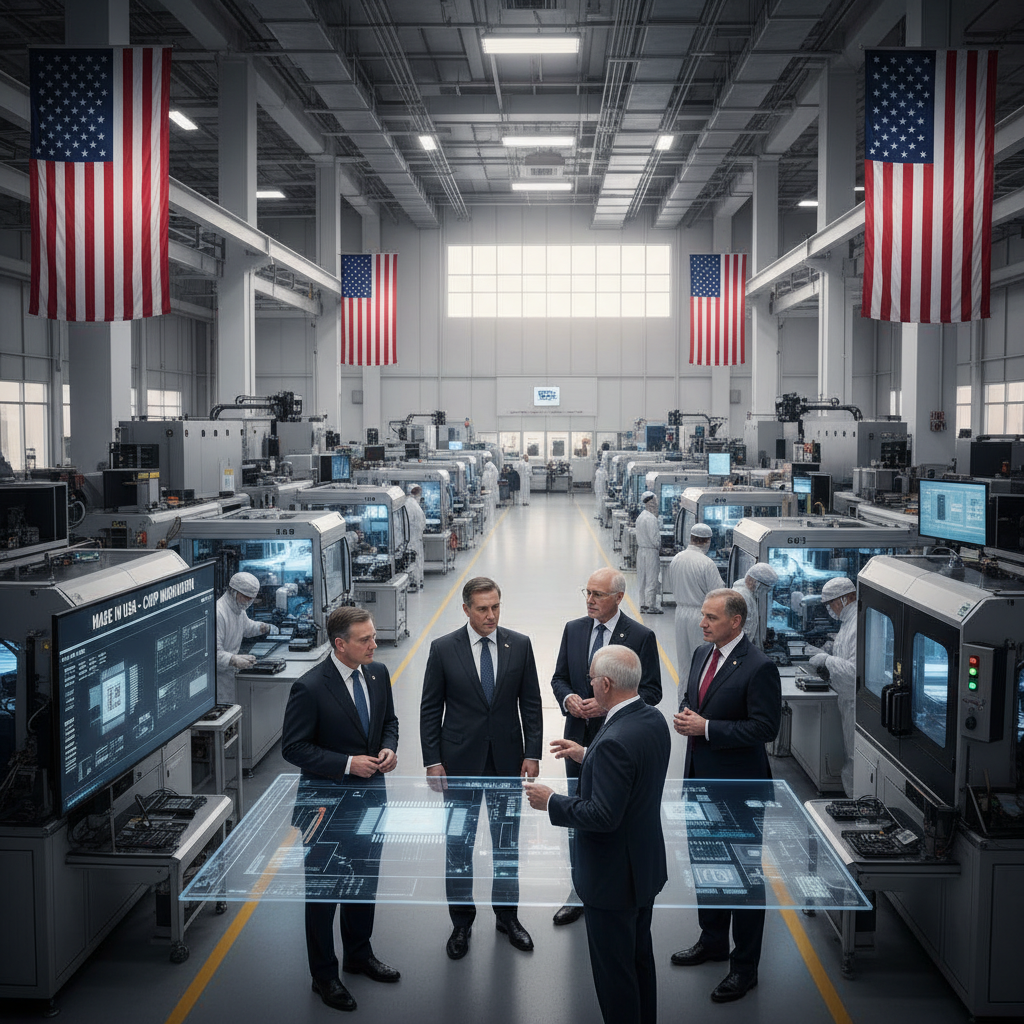
The U.S. government is now Intel’s largest shareholder after President Donald Trump signed off on a 10% stake in the troubled American chipmaker. The move, a stark reversal of Republican orthodoxy, has drawn sharp criticism from conservatives who otherwise support the president.
Trump, who has said the investment will make the United States “richer and richer,” is not backing down. He’s also said Intel is just the first in a long line of such investments, with “many more cases like it.” “We call that, in the old days, industrial policy,” he said. That’s when the government had a hands-on approach to guiding and supporting major industries.
The question now, after a presidency in which Trump focused obsessively on his personal relationship with other leaders and would occasionally impose himself on businesses like this, is whether the move is justifiable as public policy or crosses a line into socialism. For most of the 20th century, socialism has been shorthand for government taking control of the means of production for the good of society. By that standard, Trump critics say, the move isn’t all that different from what happens in China or Russia.
The politics of the situation are deliciously ironic. When Obama took control of Chrysler and General Motors in 2008–2009 to keep them from bankruptcy, conservatives labeled it a temporary nationalization to rescue two revered American brands from failure. But if Obama had taken a 10% stake in Intel, Trump’s supporters say, Fox News would have called him a closet communist.
Trump is having none of it, characterizing the move as an investment, not a bailout. “I converted almost $9 billion of grants … into equity, which was the government,” he told reporters. Grants that had already been approved for the company by President Joe Biden as part of his bipartisan Chips Act. “In other words, by the deal that I made, we just created $10 billion, $11 billion in value for the United States taxpayer out of nothing.”
Conservatives from Larry Kudlow, Trump’s former top economic adviser, to Steve Moore, another informal economic adviser, have been critical of the move. Moore, who was involved in negotiations, was withering. “I hate corporate welfare. That’s privatization in reverse,” he said. “We want the government to divest of assets, not buy assets. So terrible, one of the bad ideas that’s come out of this White House.”
National Review published an editorial, too, saying, “government shouldn’t get into the chip business.” Senator Thom Tillis said the move could risk creating “semi-state-owned enterprise a la CCCP,” an acronym for the Soviet Union. Senator Rand Paul took to X to drive the same point home: “Wouldn’t the government owning part of Intel be a step toward socialism? Terrible idea.”
Senator Bernie Sanders celebrated the move as a progressive triumph of the government using its power to help shape industry. Commerce Secretary Howard Lutnick leaped to Trump’s defense in a call with Laura Ingraham: “That is not socialism. That’s the best businessman in the United States of America in the Oval Office doing fair things for us.”
Intel, meanwhile, in a regulatory filing with the SEC required by the deal, said the arrangement “could have a negative impact” on its ability to win future government grants, global sales, and subject its business to more regulation. The company had announced earlier this year that it would lay off 15% of its global workforce, and was struggling before this move. Intel’s market capitalization stands at roughly $110 billion, or 50% less than it was at the start of the year, but its stock went up 4% after Trump’s announcement.
The Wall Street Journal reported that Trump originally demanded Intel CEO Lip-Bu Tan resign over his past ties to China, but he changed his mind after a White House meeting with the CEO. “I liked him a lot, I thought he was very good,” Trump said.
Intel has assured the market that the U.S. government will be a non-voting shareholder and won’t interfere with its business decisions. But the optics are awkward, as is the fact that, with the president of the United States also serving as the company’s largest shareholder, it’s not as if he won’t have influence.
The risk for Trump is what happens if the gamble goes south. The upside is that if Intel turns around, the administration has a prime candidate to tout as a revival of a pillar of American technology. The downside is that if the company struggles, it’s the taxpayers who are on the hook.
And with Trump now saying he will make more deals like this, the question isn’t just whether this is socialism or capitalism or simply Trumpism, but how far Trump and his party will go to reshape American economic life.
At the very least, the Intel investment has changed the relationship between the federal government and private business forever.