- calendar_today August 7, 2025
GameStop’s Strategic Shift Towards Bitcoin
Despite being widely known for volatile stock movements, GameStop has once again surprised the market with an unconventional move—this time by incorporating Bitcoin into its capital reserves. The decision could become a case study in how legacy companies adapt in a rapidly evolving financial landscape. For businesses across the Northwest, it’s not just a headline—it’s a signal.
With in-store sales continuing to decline and digital sales gaining traction, GameStop has been under pressure to reinvent its business strategy. Since the 2021 meme-stock surge that captivated retail investors and reshaped market dynamics, the company has sought new ways to stay relevant.
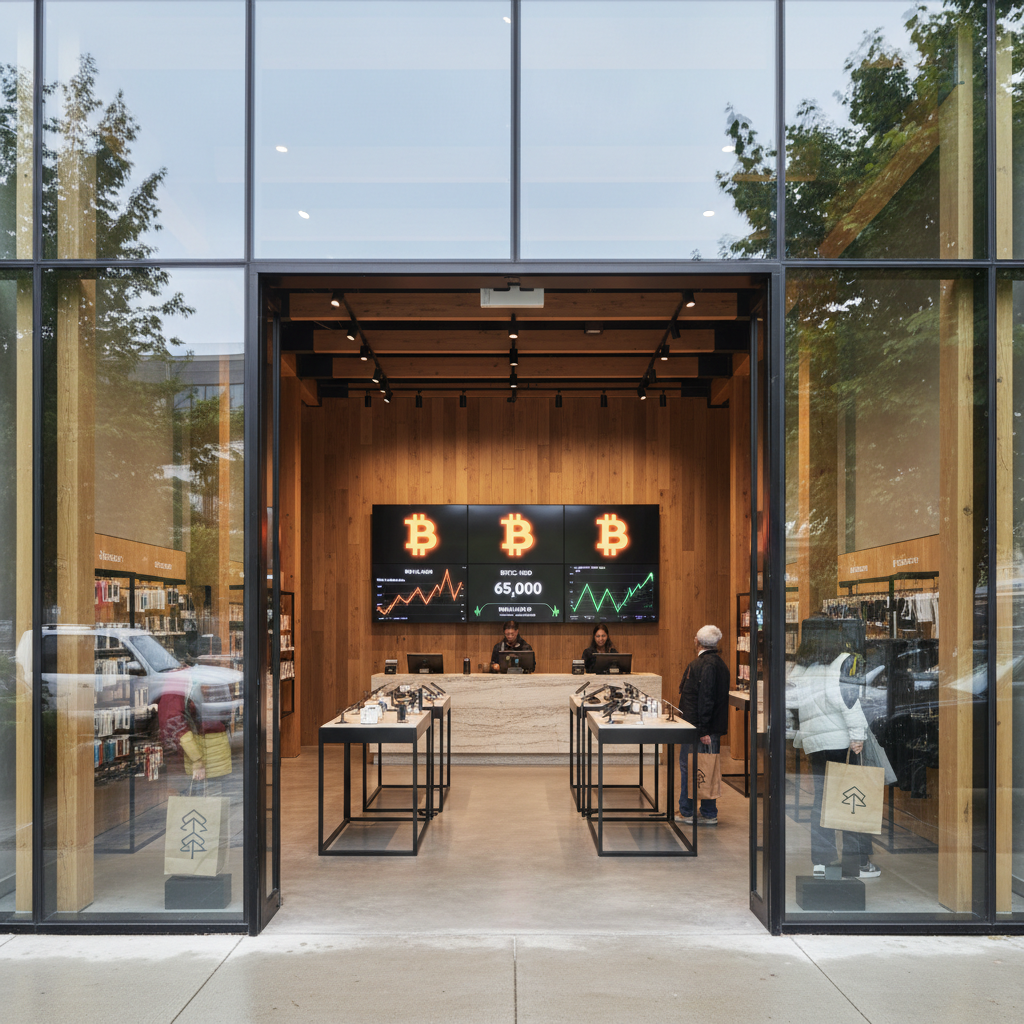
On March 25, 2025, GameStop officially announced plans to allocate a portion of its corporate treasury to Bitcoin. As reported by Coindesk, the company’s board also approved the issuance of $1.3 billion in convertible senior notes, aimed directly at purchasing Bitcoin. This puts GameStop in the same category as MicroStrategy and Tesla—companies that have placed significant bets on digital assets.
Why Did GameStop Choose Bitcoin?
Among the many options available in the digital asset market, Bitcoin stood out for several reasons. One of the most prominent is its potential as a hedge against inflation. In recent months, the Northwest has seen moderate but persistent price increases, particularly in housing and essential services. The U.S. Bureau of Labor Statistics recorded a 3.6% year-over-year rise in the Consumer Price Index for the Western region from February 2024 to February 2025.
Bitcoin, often dubbed “digital gold,” appeals to corporations seeking protection against fiat currency devaluation. The decision also appears influenced by MicroStrategy’s high-profile accumulation of more than 190,000 BTC—a strategy that significantly lifted its valuation and visibility in the tech and investment world. GameStop, by following a similar path, may be looking to position itself not just as a retailer but as a tech-savvy, future-facing company.
There’s also a cultural dimension to consider. GameStop’s investor base includes a sizable number of younger, tech-friendly individuals—many of whom already support cryptocurrencies. Aligning with Bitcoin could help deepen brand loyalty and attract a broader digital-native audience.
The company has also invested in blockchain and e-commerce projects, including the rollout of NFTs and a pivot to a more decentralized digital ecosystem. In that context, adopting Bitcoin isn’t just about financial returns—it’s part of a broader tech-forward strategy.
Immediate Market Reactions
Market responses to GameStop’s announcement were swift and mixed. The company’s stock (GME) initially surged 9% following the news, reflecting investor excitement. But, according to Reuters, GME shares dropped 7.3% within the next 48 hours as volatility returned and analysts issued cautious takes.
Bitcoin itself briefly jumped from $62,400 to $64,800 following the announcement. However, the price later stabilized, reflecting broader market dynamics and uncertainty about the long-term implications of such corporate moves. Analysts on Wall Street were quick to draw comparisons with Tesla’s Bitcoin investment in 2021, which ultimately resulted in swings in its balance sheet and market sentiment.
Implications for Cryptocurrency Investments in the Northwest
GameStop’s foray into Bitcoin has ripple effects that go beyond the company. It could reshape how other businesses in the Northwest approach digital assets. For instance, data from 2023 showed that only 8% of publicly listed companies in the region had allocated funds toward cryptocurrencies. With GameStop now entering the picture, this number may see a meaningful uptick.
Companies across Washington, Oregon, and Idaho are watching closely. Conversations with regional tech consultants and business development officers suggest that interest in digital asset integration has grown in the past year, particularly in sectors like fintech, logistics, and digital entertainment. Businesses are looking for real-world case studies, and GameStop’s move—whether it succeeds or falters—offers valuable lessons.
Historically, stock and crypto markets react sharply to major corporate moves involving Bitcoin. GameStop’s announcement caused immediate waves, drawing in retail crypto investors while prompting skepticism from institutional players. Some view it as a strategic leap; others see it as a high-stakes gamble. Either way, the decision is forcing stakeholders to revisit their assumptions about digital currency as part of a modern treasury strategy.
In regulatory terms, the development adds pressure on regional authorities. Washington State has already taken steps toward creating more explicit guidelines for digital assets, while Oregon has leaned into fintech partnerships with an emphasis on consumer protections. Industry insiders note that these frameworks, while evolving, may soon need to address more complex corporate use cases like treasury allocation, tokenized equity, or smart-contract-based supply chains.
The implications also extend into the gaming industry. With GameStop’s established links to this sector, its Bitcoin adoption could encourage developers and publishers to explore blockchain-based payment models. The Pacific Northwest, home to major tech hubs in Seattle and Portland, has the infrastructure and talent pool to support a wider rollout of crypto-integrated gaming ecosystems.
As more businesses align themselves with blockchain innovation, the region could become a leading environment for real-world crypto adoption. The coming months will be critical in determining whether GameStop’s pivot sets a new trend—or becomes another cautionary tale in the unpredictable world of digital finance.