- calendar_today August 10, 2025
2025 Tariffs Shift Investment Strategy in the Northwest
In 2025 the United States introduced aggressive tariffs including a 104 percent tariff on Chinese imports and a 25 percent tariff on foreign automobiles according to Reuters on April 3 2025. These actions are significantly impacting the Pacific Northwest where the economy is driven by exports ports natural resources and clean energy innovation.
Markets responded with a steep downturn. The Dow Jones dropped over 2200 points and the S&P 500 fell nearly 10 percent within 24 hours. Investors across Washington Oregon and Idaho quickly began reassessing their exposure.
Global trading partners retaliated swiftly. China imposed a 34 percent tariff on all American products and Canada announced a 25 percent tariff on US auto imports. This has created uncertainty across nearly every sector of the Northwest economy.
“We will not be blackmailed” said a spokesperson from the Chinese Ministry of Commerce in response to the announcement as reported by Reuters on April 4 2025.
Key Areas of Impact in the Northwest
Agriculture and Exports
Agriculture remains a cornerstone of the Northwest economy. Washington is the leading US producer of apples while Oregon and Idaho are major sources of wheat potatoes cherries and hops. With China imposing a 34 percent tariff on US farm goods growers have seen demand from Asian markets drop significantly.
The USDA projects 2025 agricultural exports at 170.5 billion dollars which is slightly higher than 2024 but still well below pre-trade-war expectations.
“We were shipping thousands of crates of apples to China every season” said a grower in Wenatchee Washington. “Now most of it stays in storage.”
Forestry and Equipment
Timber production across Oregon and Washington is slowing as global demand declines and tariffs increase costs on imported sawmill equipment and trucks. Smaller logging operations in Eugene and Medford are seeing budget strains and project delays.
“It’s a double hit” said a forest manager in southern Oregon. “Exports are down and so are our margins due to costlier machinery.”
Ports and Logistics
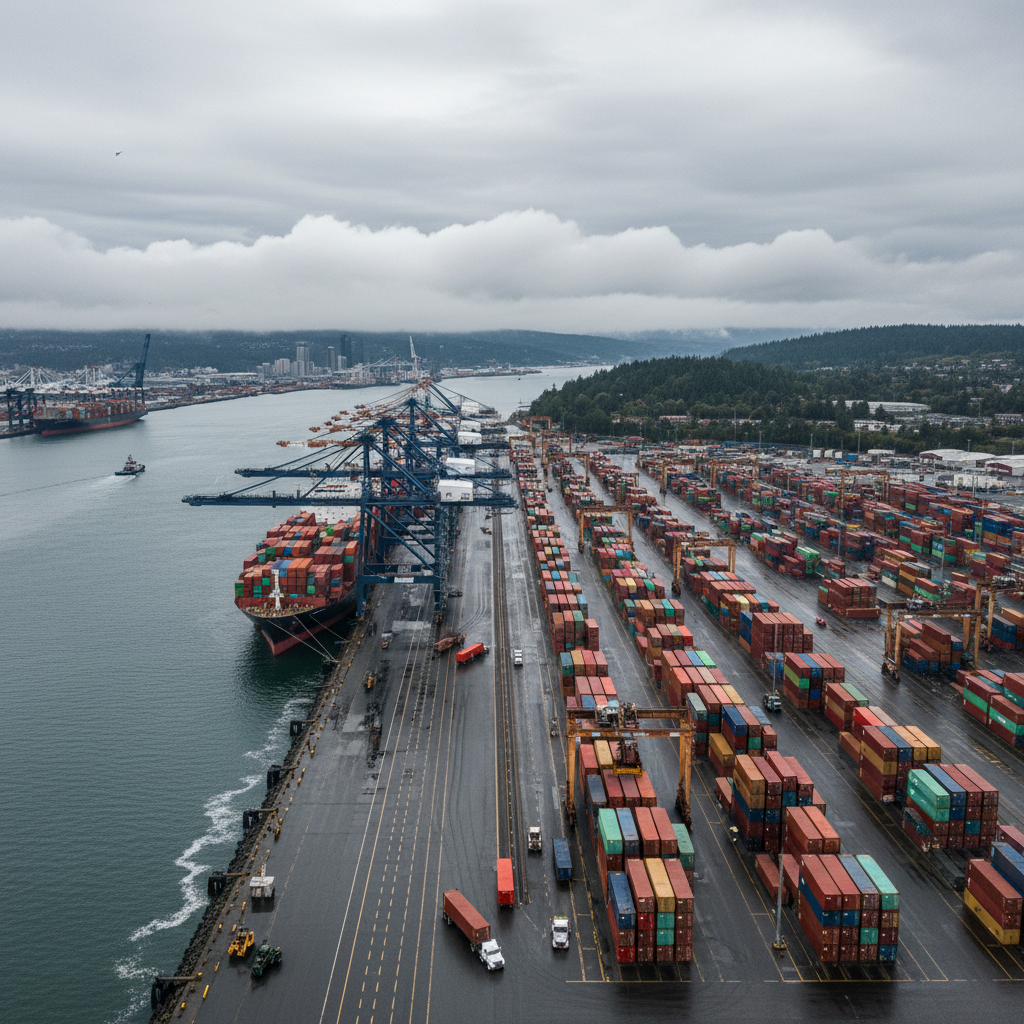
The Ports of Seattle and Tacoma serve as primary gateways for trans-Pacific trade. Tariff uncertainty has resulted in rerouted shipments longer dwell times and reduced container traffic. Warehouses across the I-5 corridor are experiencing drops in throughput and volume consistency.
A freight manager in Boise Idaho added “Even cargo from Canada and Mexico is getting delayed or repriced. It’s affecting everything from retail to agriculture.”
Clean Tech and Manufacturing
The Northwest is a hub for green technology with many firms in Seattle Portland and Spokane working on battery innovation wind turbines and solar panel systems. These sectors depend heavily on components imported from Asia and Europe. Tariffs are raising input costs and forcing delays in production.
Startups in Portland and Spokane say that investor interest has cooled due to supply chain risk and policy instability.
Investor Sentiment Across the Northwest
Markets have entered a cautious phase. Following the April announcements the S&P 500 flirted with bear market territory. Gold jumped by 1 percent to 3010 dollars an ounce as many investors shifted to low-risk assets.
“Portfolios are being restructured in real time” said Erin Simmons strategist at JPMorgan Asset Management. “We’re seeing renewed focus on domestic sectors with minimal exposure to foreign trade.”
Short-Term Shock Long-Term Opportunity
Prices for imported vehicles smartphones and industrial tools have already started rising across the Northwest. Economists warn that if the tariffs persist through the third quarter the region could face stagflation which combines rising costs with economic stagnation.
On the positive side the crisis may accelerate investment in regional infrastructure clean energy domestic food systems and supply chain localization.
What Northwest Investors Should Monitor
Across Washington Oregon and Idaho the investment landscape is shifting. Key areas gaining interest include:
- Farmland and food supply chain optimization
- Regional clean energy projects and manufacturing
- Timberland and forestry-based carbon credits
- Port logistics and rail infrastructure upgrades
For long-term investors in the Pacific Northwest adaptability sector-specific knowledge and a strong local focus may be the most valuable assets in 2025.
Stay ahead in the Northwest. Subscribe to our newsletter for expert commentary on trade policy market trends and investment strategies tailored to the Pacific Northwest.