- calendar_today September 1, 2025
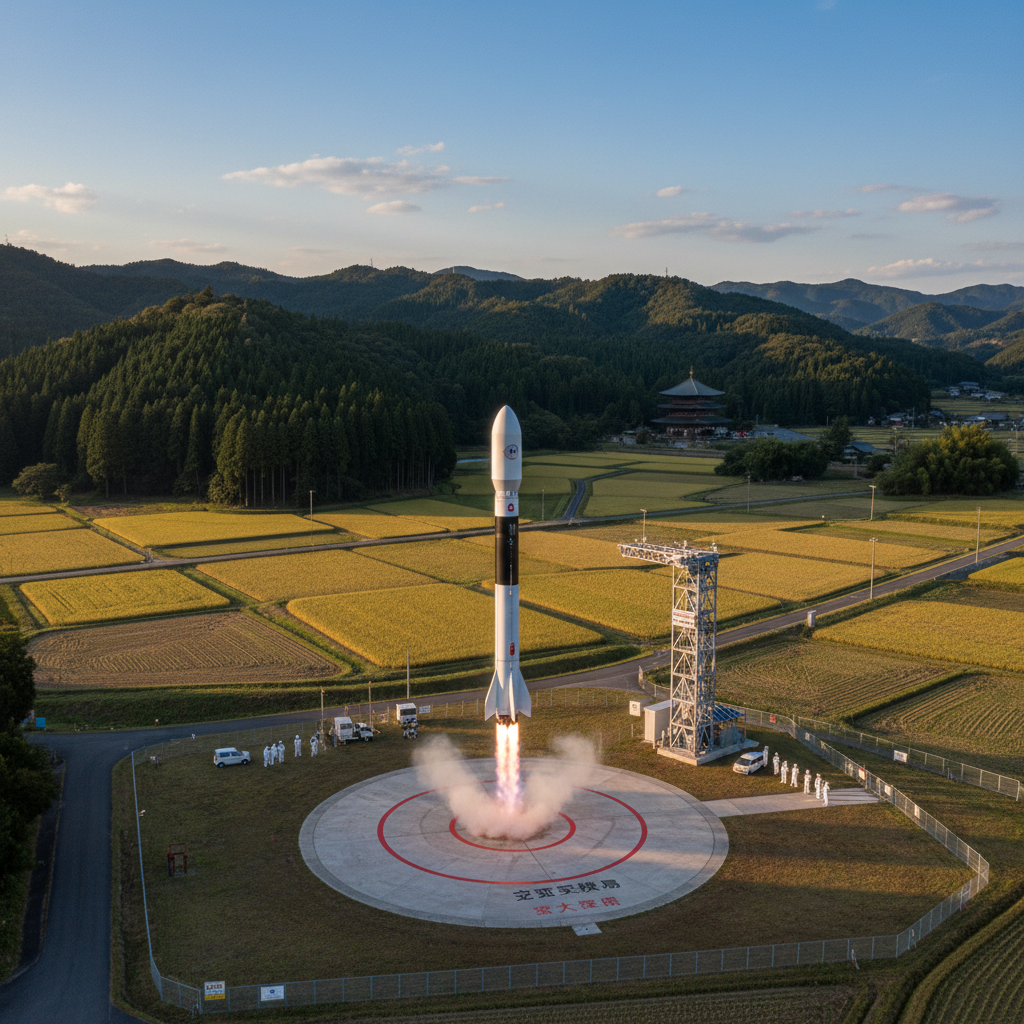
Honda isn’t an auto and motorcycle company that suddenly decided to enter the space race. This week, it took its first big step toward a new horizon by successfully launching and landing a reusable rocket that it designed. It’s the company’s first ever launch and landing of a spacecraft.
But it didn’t happen at some remote spaceport in another country. It happened in Taiki Town, Japan, a small city that’s gradually emerging as one of the nation’s leading aerospace hubs. Honda’s rocket climbed to a height of 890 feet and landed less than 37 centimeters away from its target.
It wasn’t random luck. It was design.
Honda’s rocket was a nearly 21-foot tall machine weighing over 2,800 pounds when it launched. It flew for 56.6 seconds, or just under a minute. It wasn’t enough time for a space launch, but it’s the equivalent of a massive vertical climb up the stairs in an elevator. The rocket showed it could take off and land safely — and accurately.
That’s not what one would expect from a company that’s only known for moving cars on Earth. But it proved that Honda is building more than just a concept. It’s developing a working spacecraft that could someday help change the way the world operates.
Honda isn’t just showing off. The company announced in late 2021 that it was researching space technology, but has mostly been mum since then. Now, after years of research, this test is a window into what’s been going on.
Instead of building its own ecosystem, Honda is using existing technologies from other fields. Automated driving is playing a central role in its rocket program. The kind of control it needs to safely navigate a car is the same as what it’s using to fly and land.
It’s the kind of cross-industry crossover that could make sense. And so far, it seems to be working.
This rocket isn’t a simple test of new technologies. Honda is aiming for space because it believes the upper atmosphere will become more important for business. Whether it’s communication, navigation, or data transmission, access to the stratosphere is only growing more valuable.
This test wasn’t just a first step for a new program. Honda has big ambitions for its rocket. It’s aiming to build its own mini-launch systems to keep pace with a surge in demand for satellite launches. It could eventually tie into its automotive, robotics, and communications divisions.
For now, it’s still in the early research phase. But this test suggests a vision for its future. Honda is targeting a suborbital flight by 2029, which is reaching beyond 62 miles (100 kilometers) above sea level. While it doesn’t enter orbit, it flies higher than the earth’s atmosphere — and that’s a challenging enough goal in itself.
A successful suborbital flight would prove Honda has developed the propulsion, control, and recovery technologies to fly farther. But putting satellites into orbit would require more than climbing to space. It would mean developing its own launch vehicle, controls, and possibly payload technologies.
That’s where the challenge comes in. Honda hasn’t decided whether it will build a business around its rocket program. But this test puts it on a path to making that decision.
The launch site, Taiki Town, isn’t just a backdrop. It’s actively becoming a hotbed for space innovation. It’s located in Hokkaido, and it’s working with several private companies and national agencies like JAXA to develop a space-testing infrastructure, supporting facilities, and training programs.
With Honda joining the growing list of private companies doing actual tests there, Taiki Town is rapidly earning its place as one of Japan’s premier space innovation hubs.
There’s still a long way to go. Honda is entering a field dominated by competitors like SpaceX and Blue Origin, which have the resources and experience of orbital flight. But what Honda brings is a background in manufacturing, robotics, and mobility technologies — areas that could give it a unique edge.
This week’s test wasn’t just an isolated test. It was a sign that Honda is preparing for a space journey that extends far beyond the earth’s surface.