- calendar_today August 12, 2025
Northwest firms are grappling with volatility in the market due to Trump trade policy that brings with it market risk and higher costs.
Northwest United States companies are facing increased market volatility due to Donald Trump’s trade policy. Northwest, which includes Oregon, Washington, and Idaho, is a diversified economy founded on manufacturing, technology, agriculture, and exports. With tariffs and shifting trade agreements reshaping the economic landscape, Northwest companies are facing increasing costs, supply chain risks, and global market uncertainty.
Agriculture Faces Export Disruptions and Higher Costs
Agriculture continues to be one of the primary industry sectors of the Northwest economy, with Washington State continuing to lead in apple, wheat, and cherry production, and Oregon leading in hazelnut, wine, and livestock production. Trump’s trade policies—namely putting tariffs on China and others with whom they are trading—disrupted export markets and increased input prices.
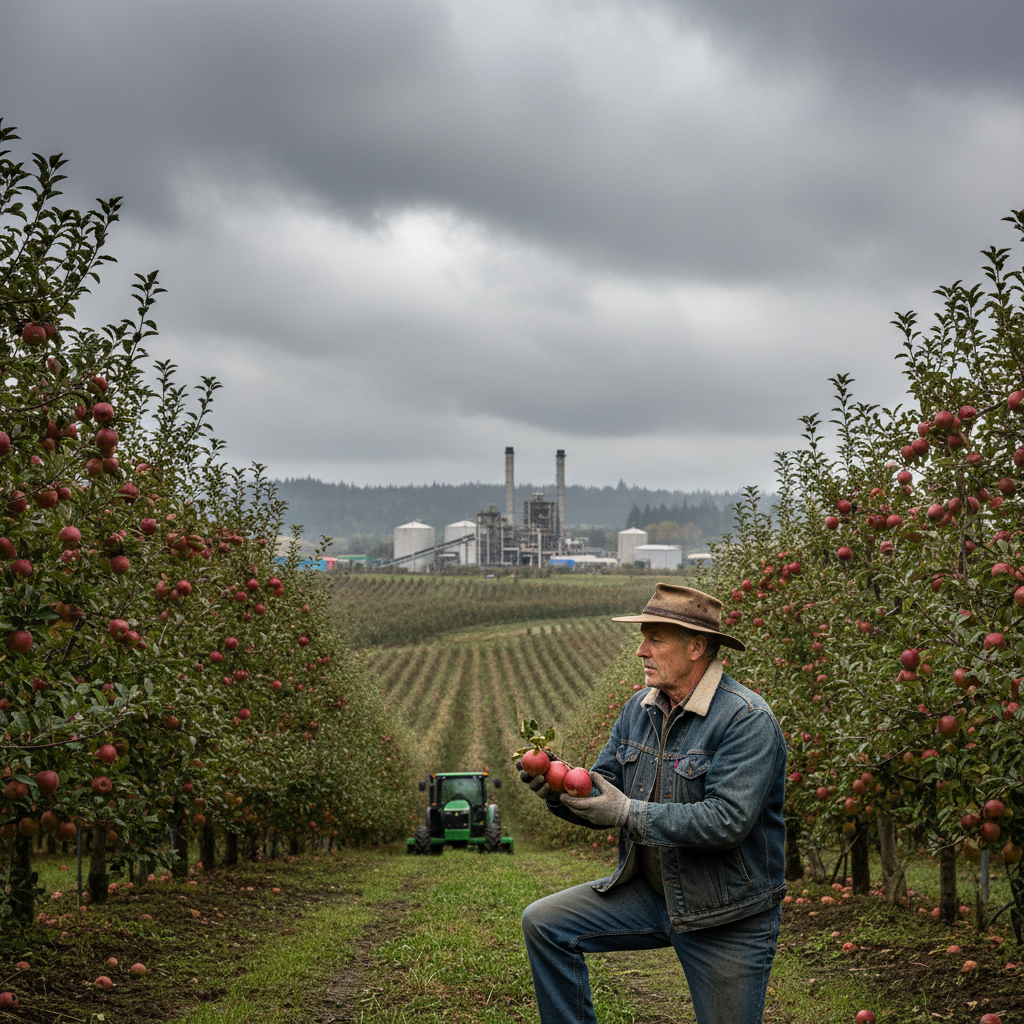
Yakima Valley and Eastern Washington growers have seen lower exports of apples and cherries due to retaliatory tariffs by China, one of the largest markets for the fruits. Most farmers say they have been forced to lower the price at which they sell their crop, while farming equipment and fertilizer, most of which is imported, have become extremely costly.
In Idaho too, dairy and potato businesses are also affected. Tariffs levied on steel used to produce processing equipment have increased the cost of doing business for potato processors. Meanwhile, dairy farmers whose livelihood depends on sales of milk and cheese to foreign buyers are losing money as foreign buyers find alternatives that are less expensive.
The Northwest’s preeminent manufacturing hub—everything from making airplanes to electronics—has also not been spared the ripple impact of trade tensions. Seattle, where Boeing and Boeing-related sectors drive much of its economy, has seen tariffs on steel and aluminum set off production expenses and supply chains to get clogged.
Portland and Spokane’s smaller manufacturers are also impacted. Companies that manufacture industrial equipment, automotive components, and consumer electronics experience increasing input costs because of tariffs on imports. For many, those extra costs are transferred to the consumer, generating higher prices and less competitiveness.
Domestic producers have also feared that Trump’s emphasis on protectionist trade policy would hurt long-term agreements with foreign suppliers. Companies that conduct business with just-in-time inventory systems are most exposed to late shipments and increased shipping costs due to disruptions in customs.
Technology Industry Monitors Global Supply Chains
The Northwest is also home to technology innovation, with top players such as Microsoft, Amazon, and increasing numbers of start-ups. As these businesses thrive, trade tensions have raised uncertainty in terms of supply chains and intellectual property protections.
Microsoft also expressed concerns regarding the tariffs’ impact on computer and semiconductor parts imported from Asian economies in Redmond. Portland’s Silicon Forest, also an industry leader in semiconductor production, is suffering owing to tariffs driving up raw material and specialized technology costs.
Technology executives are concerned that protracted trade wars will dampen access to vital components, decrease product innovation, and restrict access to global markets. Most smaller technology companies are most susceptible to supply chain interruption, which can undermine production schedules and investor confidence.
Energy and Natural Resources Ride Out Escalating Costs
The Northwest is wealthy in natural resources—timber, hydropower, and mining. Trump’s trade policies, though, are adding new expense to these industries as well.
Oregon’s forest sector—already short on labor and beset by environmental regulations—is also paying a price for higher-priced equipment in the form of steel tariffs. Washington state’s energy producers, who use foreign equipment for wind farms and solar panels, are also paying more, jeopardizing the region’s renewable energy plans.
The energy sector is also worried about the ban on liquefied natural gas (LNG) exports. With its largest export facilities based in Washington and Oregon, firms are concerned that trade tensions will lower foreign demand and impact investment in the region’s energy infrastructure of the future.
Small Businesses Struggle with Rising Consumer Prices
Small businesses, from Eugene convenience stores to construction companies, are facing increased costs as a result of tariffs on imported goods. Boise and Eugene owners say the cost of construction materials, electronics, and consumer products has gone up, and they have to absorb losses or pass on the costs to customers.
Some small business owners claim that Trump’s uncertainty created by his trade policy is counter to long-term planning. It is particularly annoying to retailers that price increases would dampen consumer consumption, particularly as inflation pressures build momentum.
Consumer Sentiment Reflects Economic Uncertainty
Households throughout the Northwest are starting to feel the brunt of rising prices associated with tariffs. Televisions, autos, and kitchen appliances have all gone up. Seattle and Portland families are spending more money on foreign products, which is tightening family budgets.
Economic commentators recommend that unless tensions in trade abate, consumer confidence is set to suffer, lowering consumption and undermining regional economic growth. Consumer discretionary spending sectors such as hospitality and tourism can be significantly affected if consumers start to rein in discretionary expenditure.
Looking Ahead: Uncertain Future for the Northwest Economy
As Trump’s trade policies shift, companies throughout the Northwest have a difficult road ahead of them. With growing expenses, supply chain disruptions, and market instability, the future of the regional economy remains inextricably linked with national and global trade trends.
Local leaders aim at the establishment of economic stability via domestic shields and international cooperation. As business changes, the Northwest will have to stay flexible in order to weather the continuing effects of trade policy reiterations.