- calendar_today August 17, 2025
U.S. President Donald Trump often sees an opportunity to talk about something other than the news at hand. On a recent afternoon, he held a press conference about a European Union trade deal but spent the majority of his time extolling the virtues of coal and demonizing renewable energy sources. “Windmills,” he said in an aside that quickly dominated headlines, are “a con job.”
The former president cited multiple conspiracy theories and hyperbolic claims as he attacked wind turbines: They drive whales “loco,” kill birds, and are even harmful to human health.
While this segment of the press conference may have seemed like little more than a gratuitous stream of outlandish talking points, it was also a demonstration of a phenomenon with deep historical roots. Conspiracy theories about renewable energy, especially wind, have been used around the world for decades, and the claims Trump repeats in interviews and on Twitter echo longstanding patterns. They are seldom about wind power itself but rather reflect an impulse that lies far beneath the surface.
In describing wind turbines as “windmills,” Trump not only gave himself a convenient euphemism, but he also tapped into the shorthand of other climate deniers and fossil fuel supporters who have long shared conspiratorial theories online.
Such moral panics may seem out of place in the 21st century, but they are more common than one might think. In the early 19th century, a moral panic spread in Europe and the U.S. over the supposed health risks of telephones. Telephone lines were said to attract germs and even microorganisms that could spread cholera and other diseases. The fear may seem ridiculous, but it also served a real purpose. The spread of telephone lines at the time was just one of many rapid changes in communication technology that allowed people to live and work differently. Those who saw their power structures threatened responded in kind.
Trump is not alone in the U.S. in spreading anti-wind conspiracies. Republican representatives like Greg Hall of Indiana have used similar talking points about “windmills” when questioning members of the Department of Energy on Capitol Hill. But in each case, the rhetoric has roots that go beyond individual politicians.
This type of anxiety may also run far deeper than a generational misunderstanding, and once a particular worldview is instilled in an individual, that worldview is hard to overcome through fact-checking or dispassionate scientific analysis. This has been a major challenge for all levels of government and for businesses and other institutions working to speed up the energy transition.
Wind turbines’ visibility in the environment has made them a flashpoint in anti-clean energy campaigns. There is something primeval about communities uniting in fear against a common foe. Turbines have been targets of real sabotage and attacks, a trend that experts say will grow if the growth of renewables continues to accelerate.
The early activism around renewable energy took place in the 1980s and 1990s, when the role of human activity in climate change was still a matter of active public debate. Scientific evidence for climate change has become rock-solid since then, but as Trump shows, climate denial and anti-wind conspiracies have endured.
The Origins and Persistence of Wind Conspiracy Theories
Scientists have been warning about the climate impacts of carbon dioxide emissions since at least the 1950s, but it was not until the 1980s and 1990s that the first proposals for large-scale wind farms and other renewables infrastructure projects began to make their way into state and national political debates.
The initial campaigns to combat climate change and speed the adoption of renewables have focused heavily on the role of major fossil fuel companies. Popular culture has also poked fun at the industry. In one famous episode of the cartoon show The Simpsons, tycoon Mr. Burns builds a tower so tall it shades out the sun, forcing residents to buy his nuclear power. The conspiracy theory accusation that wind turbines will cause an energy shortage is then depicted as both a ludicrous exaggeration and a not-completely-untrue reflection of reality.
Concerns about the need to bring powerful fossil fuel interests on board quickly faded after climate change was accepted as real by public and political leaders around the world. In 2004, then–Australian Prime Minister John Howard appointed a group of fossil fuel executives to lead the Low Emissions Technology Advisory Group. Its stated purpose, however, was not to help speed up the transition but rather to help blunt its effects by lobbying to slow down the adoption of renewables.
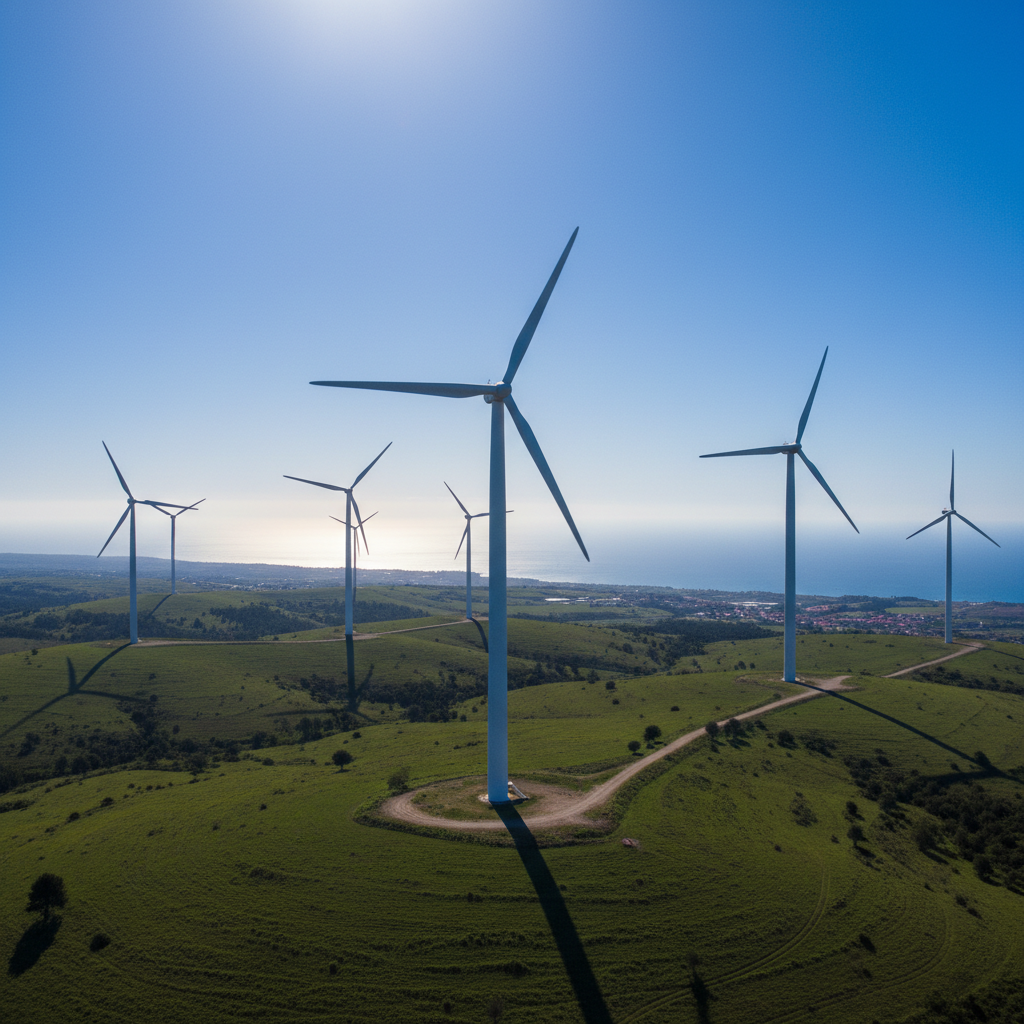
Wind turbines have also been the focus of repeated conspiracy theories. Most energy infrastructure is remote from public view, whether it’s an oil field in the desert or a coal mine in the mountains. Wind turbines, however, are placed prominently on ridgelines, plains, and other highly visible areas.
Opposition to new wind farms has also prompted research into the reasons some people are predisposed to accept anti-wind conspiracy theories. One study led by Kevin Winter and colleagues in Germany surveyed residents about their attitudes toward wind turbines. While age, gender, education level, and other demographic characteristics were related to attitudes about wind farms, the researchers found that conspiracy thinking was a much stronger predictor of opposition to wind projects.