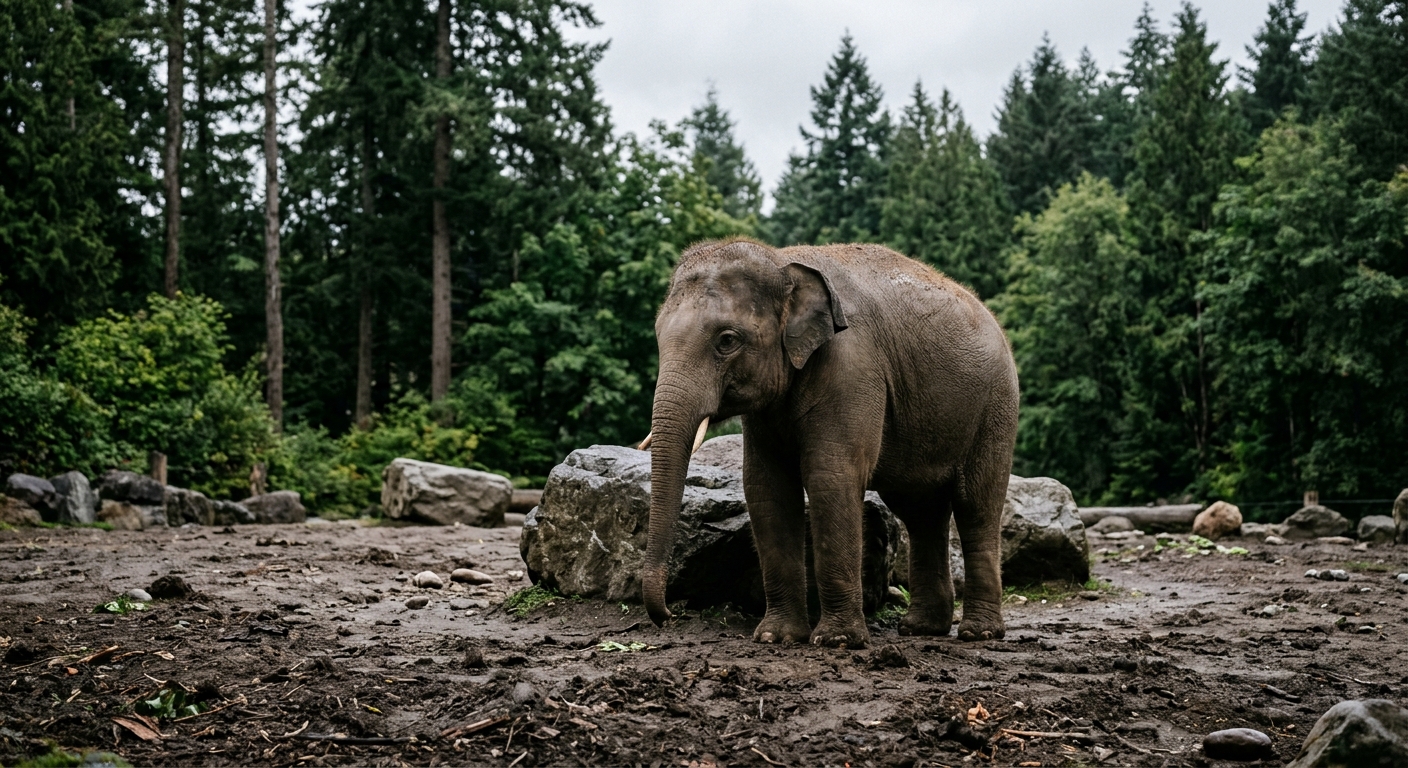
AI-generated illustration; not a photograph of the reported event.
- calendar_today October 31, 2026
Oregon Zoo’s Elephant Calf Tests Positive for EEHV
Tula-Tu, a popular Asian elephant calf at the Oregon Zoo in Portland, is fighting for her life after testing positive for elephant endotheliotropic herpesvirus (EEHV), a condition animal experts describe as 'life-threatening.'
Early Signs Prompted Rapid Response from Zoo Staff
The first signs of illness appeared on October 24, when Tula-Tu’s keepers noticed subtle changes in her behavior and energy levels. According to zoo officials, veterinarians were contacted immediately to assess the situation after observing cause for concern in the young calf.
Veterinary Team Starts Antiviral Treatment
Dr. Carlos Sanchez, the Oregon Zoo’s director of animal health, reported that initial bloodwork showed Tula-Tu had a low white-cell count. As a precaution, the veterinary team quickly began antiviral treatment while awaiting the results of advanced molecular testing to conclusively determine whether the infection was caused by EEHV.
“Right away, they could see Tula’s white-cell count was low, so we started her on antiviral medications while we waited for advanced molecular testing to confirm or rule out EEHV,” said Dr. Sanchez.
Pioneering Vaccination Efforts and the Emergence of EEHV-1B
This recent development is especially notable because Tula-Tu was previously celebrated as the first elephant on the West Coast to receive an mRNA vaccine designed to protect against EEHV-1A, one particular strain of elephant endotheliotropic herpesvirus. However, despite this innovative vaccination effort, Tula-Tu contracted a different strain, EEHV-1B.
Animal health experts emphasize that while mRNA vaccines provide protection against certain types of EEHV, other strains such as EEHV-1B can still infect immunized elephants. The current situation highlights the unpredictability and severity of viral infections like elephant herpesvirus in young calves.
Ongoing Monitoring and Hope for Recovery
The Oregon Zoo’s veterinary staff continue to closely monitor Tula-Tu and adapt her treatment plan as new information emerges. The fight against EEHV presents constant challenges for zookeepers and veterinarians, who remain dedicated to offering the best possible care for the affected calf.
About Elephant Endotheliotropic Herpesvirus (EEHV)
EEHV is a viral infection known to impact Asian elephants, especially calves. It can progress rapidly, causing serious health complications and even proving fatal without swift intervention. Veterinary professionals across the globe are working to develop effective vaccines and treatments against all strains of this dangerous disease.
Source: koin.com.