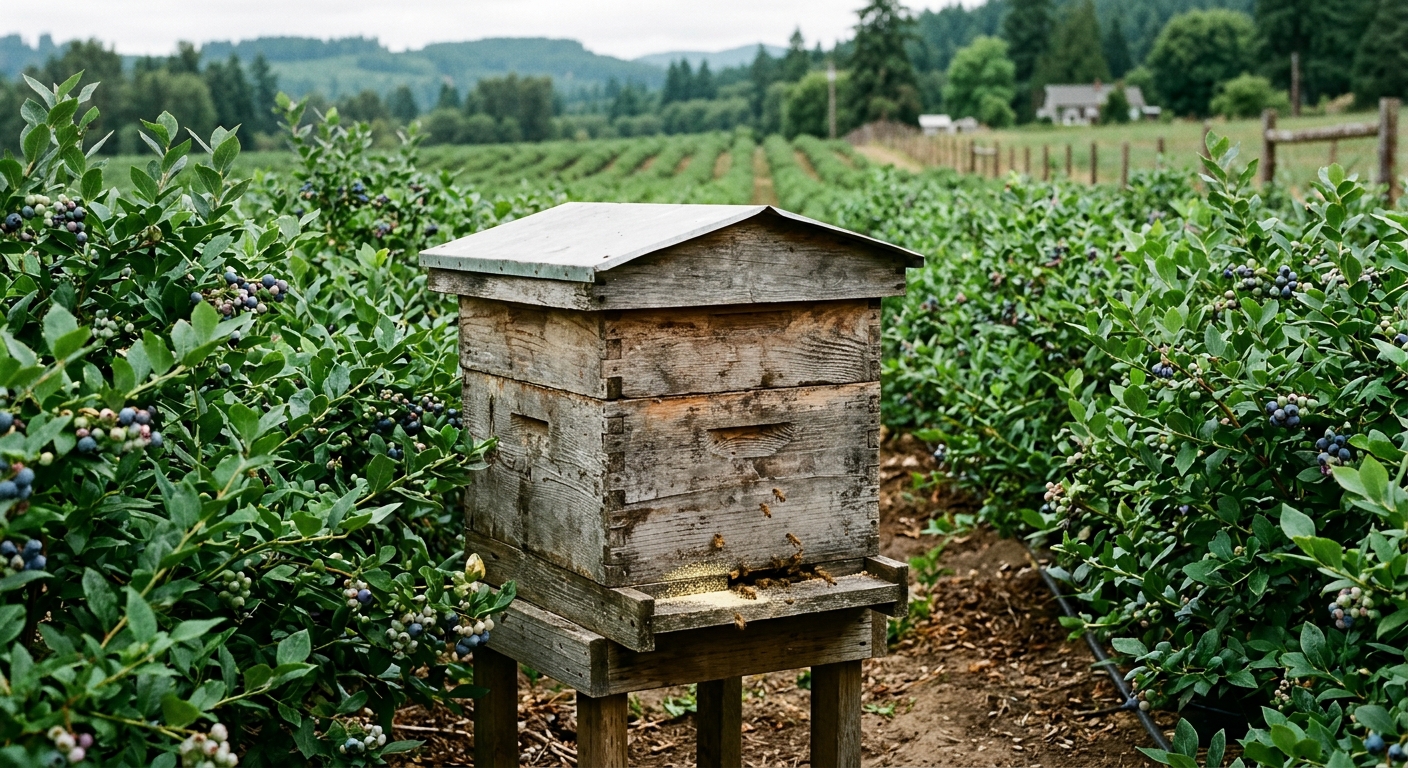
AI-generated illustration; not a photograph of the reported event.
- calendar_today November 8, 2026
Washington Dominates Blueberry Production, but Faces Pollination Challenges
The State of Washington leads the nation in blueberry production, making honeybee colonies essential for successful crop yields. However, local farmers are encountering difficulties sourcing bees due to widespread bee colony losses that occur after pollination in blueberry fields. This issue has made some beekeepers hesitant to supply their bees, creating a challenge for growers seeking effective pollination.
Unexplained Colony Losses Create Uncertainty for Beekeepers
According to Washington State University (WSU) researchers, the reluctance of beekeepers to provide honeybee colonies for blueberry pollination stems from what are described as "mysterious" losses following the pollination season. Despite the critical role honeybees play in large-scale blueberry farming, the cause of these losses remains unclear, fueling concern among beekeepers and threatening the future of commercial pollination.
WSU Researchers Partner with H4Bees to Find Solutions
A research team from WSU, in collaboration with the company H4Bees, has announced a promising development that could alleviate some of these concerns. Their study, published in Entomological Communications, investigated the use of a special feed designed for honeybees. In particular, the product called Nano-B-Feed is showing strong potential to improve honeybee colony health and size.
Results Show Nano-B-Feed Increases Colony Size
Lisa DeVetter, professor of small fruit horticulture at WSU’s Northwestern Washington Research and Extension Center, explained that feeding colonies Nano-B-Feed resulted in a "statistically significant increase in the number of bees over the control group." She emphasized the importance of colony population as a reliable marker of colony health, noting that strong colonies are vital for effective pollination and crop quality in commercial blueberry operations.
How Nano-B-Feed Works and Its Safety
Nano-B-Feed is a powdered supplement placed at the bee colony entrance, allowing bees to consume it as needed. The formula combines minerals, organic compounds, and powdered sugar. WSU officials state that each ingredient used in Nano-B-Feed is recognized as safe by the United States Food and Drug Administration, adding an extra layer of reassurance for both beekeepers and farmers.
Supporting Growers and Beekeepers
DeVetter highlighted that while wild pollinators contribute to blueberry pollination, they are insufficient for large-scale commercial crops. Therefore, healthy honeybee colonies remain indispensable. She reiterated her goal of helping beekeepers maintain robust colonies while also supporting growers’ needs for strong pollination to maximize yield and fruit quality.
Outlook for Commercial Pollination
As the mystery surrounding bee colony losses after blueberry pollination persists, the development and potential adoption of Nano-B-Feed offers a glimmer of hope for Washington’s blueberry industry. Further research and field trials are expected as WSU continues to seek solutions for the ongoing decline and works to secure the long-term viability of honeybee-supported agriculture.
Source: koin.com.